

Data append, data enrichment, data enhancement—modern marketers have heard all of these terms and more when it comes to the process of improving their data assets for more effective outreach.
No matter what you call it, updating your database with fresh information is key to continuously engaging customers. According to Gartner, poor data quality costs organizations at least $12.9 million a year on average. Don’t let your business miss out on crucial revenue by neglecting your database.
This guide will take a deep dive into data enhancement, helping you update your database, learn more about your customers, and maximize your earnings:
- Data Enhancement FAQs
- Why You Should Invest in Data Enhancement
- Types of Data You Can Append Through Data Enhancement
- 5 Data Enhancement Tips to Get the Most out of the Process

Data Enhancement FAQs
What is data enhancement?
Data enhancement is the process of improving your first-party data with context from external sources.
This process is also known as data appending, which generally describes adding external data to your records to expand them. You can append a wide variety of data to suit your marketing needs, including contact, demographic, firmographic, or geographic information.
How does the data enhancement process work?
The data enhancement process follows this general format:
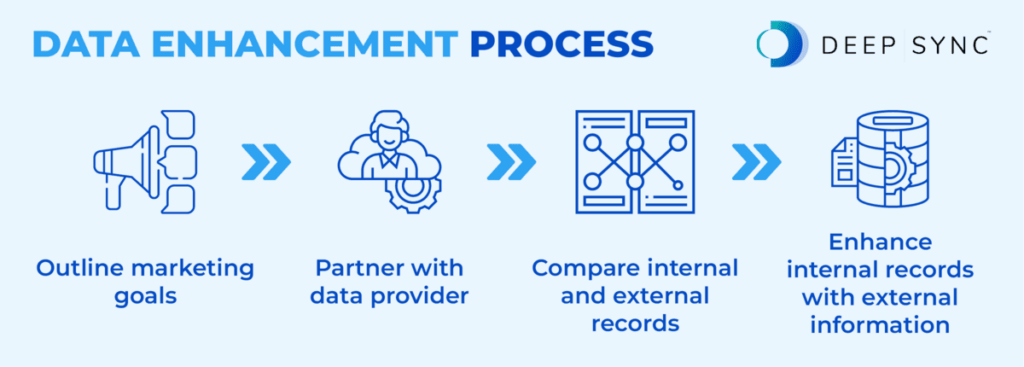
- Your team outlines your marketing goals, specifically noting what data assets will help you achieve them.
- You partner with a data provider (like Deep Sync) to enhance your database.
- Your internal records are compared side-by-side with external datasets, aligning your records with the third-party data.
- Information is pulled from these third-party datasets to supplement your existing records and create a more comprehensive picture of your audience.
When you enrich your data, you expand your database with new context, enabling you to improve your marketing efforts. Whether you’re expanding into a new target market or seeking a deeper understanding of your existing audience, data enhancement is the solution.
What is the difference between data enhancement and data enrichment?
In the realm of data marketing, there are a few different buzzwords that are frequently used to describe the same service: data enhancement, data enrichment, and even data append.
These terms all essentially refer to the same thing—the process of improving or enhancing your data by pulling information from external sources. So, whether the data provider refers to it as “data enhancement” or “data enrichment,” you’re investing in new data to add to and enhance your first-party (internal) data.
How does data enhancement connect to data hygiene?
Data hygiene refers to the accuracy of your database and involves processes such as auditing your records, identifying discrepancies, and resolving errors.
Data enhancement/enrichment and data hygiene cross paths when this “clean-up” reveals missing information—such as customer records lacking contact data like email addresses, phone numbers, and home addresses. In that case, you could use data enhancement to add the missing information to your database, resulting in more hygienic records.
However, the two processes diverge when it comes to appending other types of data—such as demographic information—to your database to otherwise enhance your marketing efforts. In this instance, the enhancement is to expand or otherwise help you better target your audience rather than to fill in gaps in your database.
Why You Should Invest in Data Enhancement
When you invest in data enhancement, your organization can experience the following benefits:

- Increased understanding of your audience. If you’re struggling to connect with your target audience, you may simply be failing to align with their motivations, interests, and needs. With data enhancement, you can append new data assets to your existing customer base to better understand who your customers are and what offerings and communications will resonate with them.
- Better customer experience. Improve the customer experience by sending personalized communications to your audience. Whether communicating via their preferred channel or sending opportunities they’re likely to be interested in (for example, local opportunities targeted to customers within a 5-mile radius), you’ll create marketing communications that are relevant and valuable.
- Enhanced ability to reach your audience. If you have internal records with missing or outdated contact information, it will be difficult to get in touch with your customers, let alone customize your communications with them. With data enhancement, you can supplement those records and finally connect with those prospects.
- Time savings. Capturing data about your prospects organically, whether through a loyalty program, survey on your website, or something else, can take quite some time. Additionally, it provides little information about prospects that haven’t engaged with your brand yet. Data enhancement can give you that information almost immediately.
- Cost savings. Because appended data is verified for both accuracy and responsiveness, you’re less likely to send communications to email addresses, phone numbers, and home addresses that won’t yield a response. As a result, you can save valuable marketing dollars to direct toward other efforts.
- Growth potential. If you’re looking to expand into a new market, data enhancement can provide you with demographic, geographic, and contact information to reach prospective customers within that new segment. Rather than slowly building up your contacts in that area, you can hit the ground running with insider information.
Data enhancement gives your team the resources needed to better understand and reach your target audience. When you use the information you glean to customize your campaigns, you can create a better customer experience and boost your return on investment (ROI), presenting a win-win situation for your customers and stakeholders alike.
Types of Data You Can Append Through Data Enhancement
There are several different types of data you can append to your records, depending on your marketing goals. Let’s dive deeper into each of these data types.
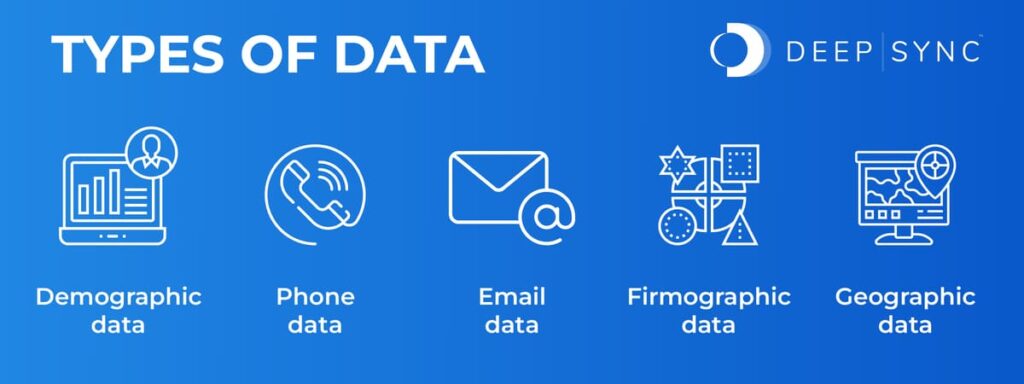
Demographic Data
Demographic data can provide some basic insight into who your customers are. This information can help you tailor your marketing efforts to different customers’ wants, needs, interests, and pain points.
Potential Data Points
The demographic data you may append to your database through data enhancement includes:
- Age
- Income
- Marital status
- Level of education
- Presence of children in the home
- Lifestyle attributes
- Buying behaviors
Example
Let’s say you’re running a back-to-school marketing campaign for a clothing brand. Your ideal customers would be high school students or parents of elementary and middle school students. To target these customers specifically, you could append age data and information about the presence of children in the home to your existing customer records so you can focus your outreach on those most likely to convert.
Phone Data
Did you know that the average American spends 4 hours and 37 minutes on their phone each day? With phone appends, you can reach your customers on their mobile devices—where they already spend much of their time—through texts or phone calls.
How to Obtain Phone Data
When appending phone data, there are two different processes you may follow:
- Standard phone append. This process allows you to add phone numbers to incomplete customer records using the information you already have.
- Reverse phone append. If you already have customer phone numbers, you can use that data to obtain additional information, such as customer names and email addresses.
Example
For example, you may be working with a political organization looking to raise money for an upcoming text-to-give campaign. During a database audit, the organization finds that it has phone numbers for only 20% of its constituents. To power a successful fundraising campaign, the organization can append phone numbers to its database by uploading its records to its data provider’s system, which will then match them against an external database to fill in missing data.
Email Data
Email is a tried-and-true marketing channel, with the average open rate for an email marketing campaign at 36.5%. However, it’s extremely easy for email addresses to become outdated—whether your audience members have started a new job, graduated, switched email providers, or simply stopped using a certain account.
How to Obtain Email Data
Just like phone appends, there are two different ways to conduct an email append:
- Standard email append. You can work with a data provider to append missing email addresses to incomplete customer records or update existing ones.
- Reverse email append. Alternatively, you can use email address data to learn more about your customers and acquire information like customer names and phone numbers.
When it comes to email marketing and appending, it’s important to respect your audience’s wishes regarding direct marketing solicitations. By working with a reputable data provider, you can identify customers who have registered with the ANA’s DMAChoice™ Program and avoid sending them unwanted messages.
Firmographic Data
Firmographic data relates to organizations and businesses rather than individuals.
Potential Data Points
Agencies and brands conducting business-to-business (B2B) marketing campaigns may benefit from appending this type of data, which includes information like:
- Industry
- NAICS codes
- Internal structure
- Annual revenue
- Number of employees
- Market segment
- Location
- Phone numbers
- Website address
- Email addresses
- Key contacts
Example
Let’s say you run a project management software company and want to start working with larger businesses. By appending firmographic data, you can learn more about your prospects, including their business size, how to contact them, and who the best people to contact are.
Geographic Data
Lastly, you can add geographic data to your database to enable geotargeting and greater personalization. This type of append involves adding latitude and longitude coordinates to your customer data to power hyper-targeted marketing based on their location.
Example
For example, let’s say you’re hosting an event to promote a new product. With geographic appends, you can identify customers within a certain radius of the venue and only market to those nearby to reserve resources for people most likely to attend.
5 Data Enhancement Tips to Get the Most out of the Process
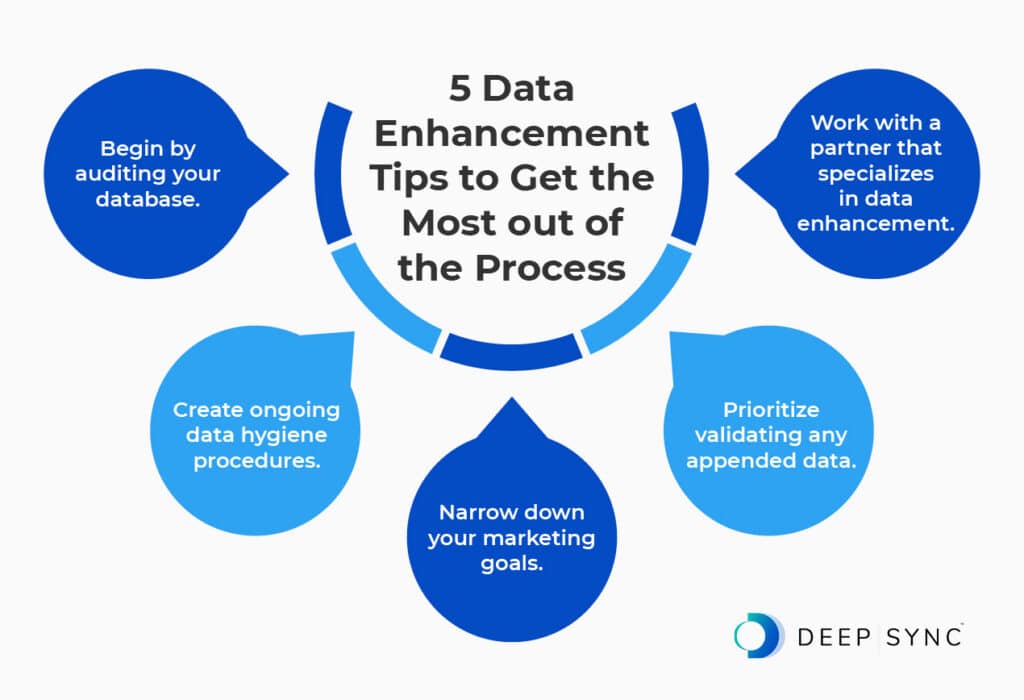
Begin by auditing your database.
Regardless of your goals or the information you’re seeking, data enhancement always adds new information to your database. If that database and the first-party information it contains aren’t well-organized and maintained, the data you append will only make the problem worse. Additionally, it will be challenging to access your new data and use it in your strategy without proper organization.
Before conducting any data enhancement efforts, audit your records. An audit examines your database and highlights discrepancies, such as unclean data or missing information. This audit will:
- Give your team a realistic view of where your data assets stand now and the discrepancies in your first-party data.
- Help you see which areas of your database are most in need of improvement.
Using the information revealed through this audit, you’ll want to fix any immediate errors in your database before appending any new information to it. For example, you may complete data hygiene tasks such as:
- Standardizing information like home addresses, email addresses, phone numbers, titles, and more.
- Suppressing unnecessary information that’s not valuable for your team, such as the names and addresses of minors and individuals currently in correctional facilities.
- Removing or merging duplicate records into one cohesive file.
Addressing these errors before appending new data to your records will prevent major headaches down the line. However, remember that cleaning up your records isn’t a one-and-done effort, and you’ll need ongoing procedures to maintain them.
If all of the above makes your head spin, keep in mind that data providers, such as Deep Sync, can provide these types of services for you.
Create ongoing data hygiene procedures.
We’ve briefly touched on the concept of data hygiene, but essentially, data hygiene refers to the cleanliness (i.e. lack of errors) of yData hygiene refers to the cleanliness of your database, ensuring there are no errors or inaccuracies. Even if you conduct a comprehensive cleanup after your database audit, your newly appended data and first-party records can quickly become muddled as you begin using this information.
All it takes is a single keystroke to change an email address, phone number, or mailing address, making communications to those contacts non-deliverable. To avoid this scenario and keep data clean, establish ongoing data hygiene procedures that provide your team with clear instructions for maintaining your enriched data over time. Your procedures should include guidance around:
- Standardizing data entry. Create rules for standardizing contact information, identifying information (such as titles), and other fields in your database. When staff members know how to abbreviate street names, job titles, and more, they’re less likely to enter data incorrectly from the start.
- Handling errors. Define how different errors should be handled once they’re discovered, whether a duplicate, incomplete, or incorrect record. Should the team member elevate the issue or resolve it independently? Is there a system for noting where these changes have been made?
- Preventing data build-up. Note how staff members can prevent unhelpful information from entering your system going forward. For example, are you currently collecting nonessential information in your “Contact Us” form? Consider adjusting the form to collect only useful information.
Outlining data maintenance procedures now will prevent a mass cleanup down the line, so it’s worthwhile to create these rules, document them, and ensure your entire team understands them going forward.
Narrow down your marketing goals.
When it comes down to it, there is a ton of information you can access about your audience—age, birth date, marital status, travel habits, homeownership, loans, modeled credit scores, and gender. This is just the tip of the iceberg.
The wealth of information that you can access with relative ease through data enhancement is overwhelming, but not all of it will be useful for your data marketing strategy. For example, if you’re seeking firmographic data to market a business-to-business product such as a cleaning service, demographic and lifestyle data about each and every employee at the firms you’re researching won’t be helpful. Instead, it’s going to clog your database and give you more information to parse through when creating your campaigns.
Prior to appending data, take a close look at your marketing goals. Rather than sorting through the masses of data that you can append, consider the information that’s needed to help reach your goals and only seek to append those data assets. And if you’re uncertain of what information will be best, your data provider can provide recommendations.
For instance, let’s say you’re running a digital marketing campaign for a university that’s looking to increase alumni donations using email marketing. The following data may help you in the effort:
- Alumni email addresses
- Employment status
- Marital status
- Homeowner status
- Net worth
- Modeled credit data
- Philanthropic involvement
This information would give you insight into your prospective donors’ financial capacity and affinity to give, as well as the best way to reach them. Then, you’d work with a data provider to append this information to your database. By crafting your append around your goals rather than securing data and deciding how it can help, you prevent unnecessary information from building up in your database (and potentially save costs on the append itself).
Prioritize validating any appended data.
Just as you want to prepare your database for new data, you’ll also want to make sure the data you’re appending is in tip-top shape. Any new assets you add to your first-party records should be accurate, up to date, and, for contact information, validated to achieve high response rates.
The best way to ensure any information appended to your database is validated for accuracy and responsiveness is to work with a trustworthy data provider.
Deep Sync not only uses leading databases during data appends but also validates the information. For example, in email validation, each email address is analyzed independently and undergoes a multi-step process to determine its deliverability potential. This process prevents you from sending communications to deactivated inboxes, those with known SPAM traps, and more.
Validation efforts, such as the example above, prevent you from investing in information that won’t actually lead to results for your team. Instead, you’ll focus on information with a high likelihood of return.
Work with a partner that specializes in data enhancement.
Last but not least, we recommend working with a provider that specializes in data enhancement. There are many data providers on the market, many of which are automated services that give your team access to data assets and little else.
Instead, we recommend working with a full-service partner that can do all of the following:
- Give your team access to a variety of data assets.
- Validate any data assets prior to appending them to your database.
- Provide data hygiene services to save your team time and resources.
- Lend data marketing expertise to help guide data usage in your campaigns.
Incorporating a large influx of data into your marketing strategy can be difficult without a strong plan for how that data will be used. A dedicated data marketing partner can help you avoid these pitfalls and provide the framework you need for future success.
Improve Your Marketing Strategy with Data Enhancement
Data enhancement helps you upgrade your marketing efforts by improving your understanding of your audience so you can send them relevant communications and offers. Deep Sync provides data enhancement services for brands, agencies, and data resellers. We can help you every step of the way, offering data hygiene services to prepare your database and providing access to third-party data that will enrich your database.
To get started with our data enhancement services, contact the Deep Sync team today. To explore data-driven marketing topics further, check out the following additional resources:
- What Is Data Hygiene? + 6 Best Practices for Accurate Data. It’s crucial that your database is clean before you append any new information. Explore this guide to data hygiene to bring your database to tip-top shape.
- What Is First-Party Data and Third-Party Data? Expert Guide. Learn more about the differences between various data types and how you can incorporate each into your marketing strategy.
- How to Choose Third-Party Data Providers: Top Considerations. Select the right third-party data provider for your business using the tips in this guide.











0 Comments