

Digital marketing has dominated businesses’ promotional efforts for years, but that doesn’t mean direct mail is irrelevant! In 2026, overlooking the power of physical mail will be a costly mistake.
Direct mail continues to drive high engagement, strong conversion rates, and lasting brand recall—making it a crucial tool for acquisition, awareness, and retention. That’s why direct mail should be a key piece of your marketing mix that works alongside your online efforts to engage customers.
2026 will be the year of direct mail! Here are some direct mail statistics and best practices to consider as you plan your next campaign:
- Direct Mail FAQs
- Top Trends for Direct Mail in 2026
- 5 Tips for Successful Direct Mail Marketing in 2026

Direct Mail FAQs
Is direct mail still effective in 2026?
Yes, direct mail is still effective in 2026. In fact, despite rising postal costs, direct mail has the highest ROI for individual media at 161%. While marketers continue to saturate email inboxes, sending direct mail presents an opportunity to capture consumers’ attention with a physical mailing. This year, companies are dedicating 25% of their marketing budgets to direct mail, and approximately 90% of businesses have increased their investments in direct mail.
Why are direct mail campaigns valuable for businesses?
Direct mail campaigns are valuable because they:

- Cut through digital fatigue. Consumers see thousands of digital ads and emails each day, but they likely only receive a few pieces of mail at a time. Direct mail gives brands a better chance to connect with potential customers and hold their attention.
- Produce high response rates. As mentioned before, direct mail has a high ROI, meaning the higher investment is worth it because marketers see better conversions from direct mail than digital channels. Postal rate increases have caused a decline in mail volume, but this change makes it easier for your print marketing materials to stand out.
- Enable personalized, privacy-compliant targeting. Direct mail relies on deterministic data. Instead of using third-party cookies—which can be unreliable—direct mail requires verifiable address information that, in most cases, customers have directly given you, or you can easily obtain it from a privacy-focused data provider.
As competition for consumer attention grows, brands need to find ways to stand out from the crowd. With many consumers experiencing digital fatigue, turning to tangible, personalized mail lets your business create lasting impressions and drive engagement.
Why does direct mail marketing work?
For consumers, direct mail’s tangible nature engages the senses, captures attention for longer periods, and provides extended recall. Consumer sentiment surrounding direct mail is positive, and consumers seem to trust direct mail more than other channels.
Research shows that as a result of direct mail…
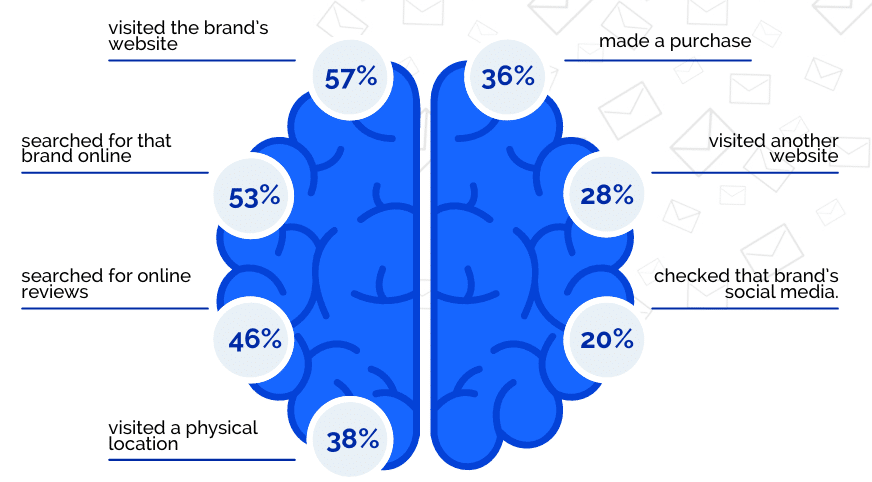
- 57% of respondents visited the brand’s website.
- 53% searched for that brand online.
- 46% searched for online reviews.
- 38% visited a physical location.
- 36% made a purchase.
- 28% visited another website.
- 20% checked that brand’s social media.
These direct mail statistics show that this channel is highly effective in driving consumer action!
Top Trends for Direct Mail in 2026

Sustainability Focus
Many companies have moved toward using recycled paper for their direct mailings to increase sustainability. Additionally, businesses are prioritizing cleaning their customer address data through change of address processing to avoid wasting direct mail materials on the wrong addresses.
Hyper-Personalization
Instead of mailing to generic demographics and simply addressing recipients by name, marketers are using AI to customize mailings based on each audience member’s preferences, with 74% of high-ROI teams using AI to develop more personalized direct mail messaging. For instance, companies may change the visuals and discount offers on their mailings to match the products an individual customer has browsed on their website.
Logistics Intelligence
Since postage rates are rising, marketers want to make sure the mailings they’ve invested in are actually reaching the households they’d like to target, but 87% of company leaders say logistics are a blind spot in their direct mail strategies. Adopting logistics intelligence platforms that track mail entry, routing, and confirmed delivery scans helps ensure the mailings a company sends reach the right people.
Privacy-First Targeting
As many digital ads lose effectiveness due to the unreliability of third-party cookies, companies are taking the opportunity to conduct privacy-first targeting using direct mail. Marketers can use their first-party data, third-party direct mail lists, and identity resolution to reach their target audiences. When working with a third-party data provider, confirm they are compliant with consumer privacy laws. This ensures your campaigns reach only the consumers who are interested in receiving marketing communications.
Phygital Formats
To combine the best of online and offline marketing, many businesses are going “phygital.” For example, a company may add a QR code to their mailing that takes the consumer to a custom landing page pre-filled with their information that they can easily submit. Additionally, some higher-end brands are testing Near Field Communication (NFC)-embedded paper, which enables consumers to tap their phone to the mailing to launch a video on their mobile devices.
5 Tips for Successful Direct Mail Marketing in 2026
Building on emerging trends in direct mail for businesses, here are some of our top tips for successful direct mail marketing campaigns.

1. Implement data hygiene best practices.
To reach the right people with your direct mail and avoid wasting resources, develop a data hygiene routine. Cleaning your data on a regular basis ensures it’s accurate and up-to-date, empowering you to connect with your intended target audiences.
A full data hygiene routine should include:
- Auditing the current state of your company’s stored data
- Establishing data governance policies
- Developing uniform data entry standards
- Validating customer records and addresses against an external data source
- Suppressing unhelpful data and removing duplicate records
- Appending or enriching data to fill in database gaps
Proper data hygiene also ensures you respect consumers’ privacy and adhere to their preferences. For example, you may work with a data provider like Deep Sync to perform Do Not Mail Suppression, ensuring you don’t send direct mail to those registered with the ANA’s DMAChoice™ Program.

2. Use direct mail lists.
If you’re looking to expand your reach, consider using direct mail lists. These lists contain physical addresses for members of your target audience so you can go beyond your current customer base and tap into new prospects. They may also feature other attributes, like demographics or interests, enabling you to personalize your direct mail communications.
The most common types of direct mail lists include:
- Residential lists, which empower you to reach virtually every mailable residential address in a given area
- Consumer lists, which help focus your direct mail campaigns on audiences that fit certain demographic, lifestyle, psychographic, and transactional attributes
- Business lists, which are ideal for reaching businesses that might need your products or services
- Specialty lists, which enable you to connect with consumers and businesses based on specific niche attributes
- Response lists, which segment consumers and businesses based on their unique habits, interests, and purchasing behaviors
Different types of lists are best for different purposes. For instance, if you’re opening a new restaurant, you may want to use a residential list to connect with every household within a certain mile radius. On the other hand, if you’re looking to promote a political campaign, you might want a specialty list organizing voters by party to reach the right people.
3. Personalize your messages.
Consumers expect personalized experiences, and direct mail is no exception! 64% of consumers are more likely to engage with personalized messaging rather than generic marketing, and 96% of company leaders say personalized direct mail drives results. Using data to personalize names and segment your list to include tailored offers provides a more customized approach, leading to higher response rates and stronger customer relationships.
4. Include a clear call-to-action (CTA).
When someone receives your direct mail piece, they must know what to do next. Make it easy for recipients by including a QR code, the URL to your website, or information about redeeming a special offer. Remember to make your CTA compelling, specific, and easy to follow to maximize conversions.
5. Use direct mail to complement digital campaigns.
Increase your response rates by reaching the same audience through direct mail and digital channels. Tools like QR codes, identity resolution, and social media retargeting can help create a seamless omnichannel experience that drives conversions, boosts engagement, and improves direct mail ROI.
This approach empowers marketers to meet their audiences where they are, providing unified experiences that drive consumers to act. This is accomplished by extending reach to a broader audience, consistent messaging that creates awareness, and a variety of touchpoints that make responding easy.
When direct mail and digital marketing channels are combined…
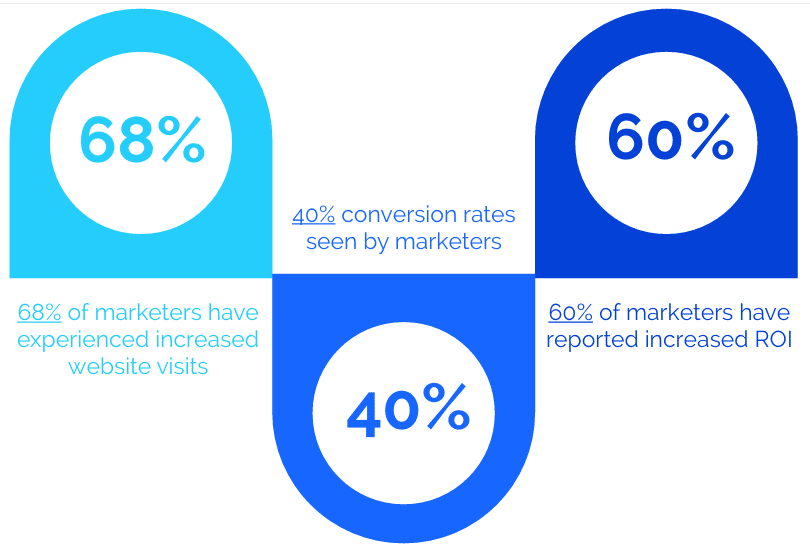
- 68% of marketers have experienced increased website visits.
- Marketers see conversion rates of 40%.
- 60% of marketers have reported increased ROI.
Effective omnichannel campaigns rely on high-quality data; it’s important to be able to reach the same, exact audience across physical and digital touchpoints. That’s where Deep Sync can help!

6 Benefits of Cross-Channel Data Activation
Experience increased campaign response rates by leveraging audiences that support cross-channel initiatives. Unlike traditional marketing, which tends to focus on independent channels and generally relies on separate datasets to power campaigns, cross-channel marketing places the primary emphasis on the audience, promoting consistency across channels.
Let’s look at six key benefits of cross-channel data activation.
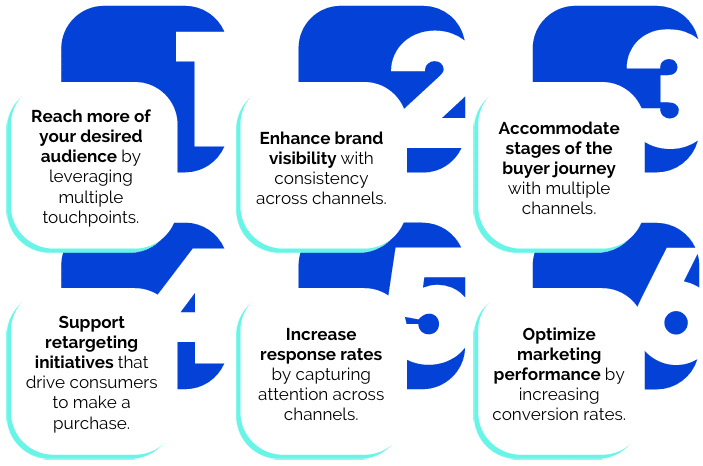
1. Reach more of your desired audience by leveraging multiple touchpoints.
By leveraging multiple touchpoints to share your brand’s message, you reach your audience where they are most comfortable. Incorporating email, programmatic, and/or social media advertising alongside your existing direct mail efforts creates additional opportunities for engagement where your audience is already spending time.
2. Enhance brand visibility with consistency across channels.
A consistent presence with familiar messaging across multiple channels reinforces brand awareness and makes your offerings more memorable. When your audience encounters your brand on a variety of platforms, it strengthens their perception and recognition of your brand and its value proposition.
3. Accommodate stages of the buyer journey with multiple channels.
Different channels are known to cater to consumers at different stages of the buying journey. For instance, social media is effective for brand awareness and engagement, while email marketing can nurture leads towards conversion. Using multiple channels enables you to tailor your messages and strategies accordingly.
4. Support retargeting initiatives that drive consumers to make a purchase.
Cross-channel audiences are ideal for retargeting initiatives that drive consumers toward making a purchase. For example, you can retarget individuals who have engaged with direct mail through digital channels, reinforcing your brand’s message and encouraging them to take action.
5. Increase response rates by capturing attention across channels.
Consistent, personalized messaging across channels helps capture your audience’s attention. Consumers are more likely to interact with brands when they feel understood and valued, which can translate to increased engagement, email open rates, social media interactions, and website visits.
6. Optimize marketing performance by increasing conversion rates.
By optimizing marketing efforts based on data-driven insights, brands can reduce marketing costs by avoiding wasted impressions, increase revenue from higher conversion rates, and improve customer lifetime value by building stronger relationships.
Overall, a thoughtful combination of digital and direct mail outreach can boost direct mail response rates and return on investment (ROI).

Reach Audiences with Deep Sync
Reaching your desired audience with the right message at the right time can prove difficult in today’s world of disparate datasets and fragmented channels. Doing so requires maximizing your first-party data and leveraging compliant, trustworthy third-party audiences.
Deep Sync’s best-in-class datasets and integrated offerings enable you to create an audience once and activate it across online and offline channels for impactful marketing that drives meaningful results. With information on 97% of U.S. consumers age 18 and older and more than 1,500 attributes across Consumer, B2B, Home, and Student datasets, here are some of Deep Sync’s data offerings:
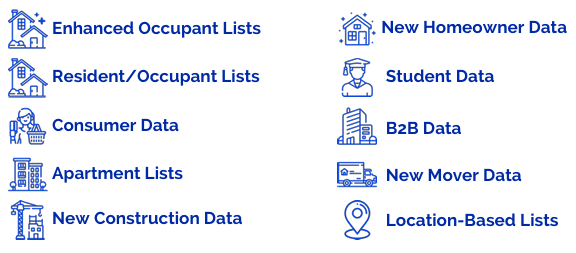
- Enhanced Occupant Lists
- Resident/Occupant Lists
- Consumer Data
- Apartment Lists
- New Construction Data
- New Homeowner Data
- Student Data
- B2B Data
- New Mover Date
- Location-Based Lists
Want to learn more about how to improve your direct mail strategy? Check out these additional resources:
- How to Use Direct Mail Lists to Run a Successful Campaign. Learn more about direct mail lists and how they improve campaign results.
- What Is Data Hygiene? + 6 Best Practices for Accurate Data. Discover how to thoroughly clean your data before your next direct mail campaign.
- What Is Identity Resolution? The Ultimate Marketer’s Guide. Explore how identity resolution powers consistent cross-channel targeting.










0 Comments